domingo, 15 de abril de 2012

Honorable Mention at Ideame++ 2012

UPDATE: Fly to the all-new heartbeats homepage for latest info and downloads!
http://dotheartbeats.wordpress.com/about/

Man... I can't believe it!

.heartbeats earned a Honorable Mention at Ideame++! I was given a cute Toki Tori pendrive as a "special prize" for developing a "game that has something... (unique)".

.heartbeats
.heartbeats is an experimental game focusing on interactive narrative and dynamic music. The game tells the story of four people in four different moments in life (a teenager facing depression, a young man regretting his actions, an adult woman looking back on her life choices and a young girl enjoying life).

Gaming Experience
The game tells an emotional story with plenty of different branches, a "try to learn" approach, and an interactive help system which tells you tidbits of information about each individual's story. In the game, you read how the story unfolds and make decisions in certain points of it. Each decision will affect every character's life inminently, as everybody is connected (by their hearts beating in unison).

The whole experience plays like an interactive book, focusing on activating the player's imagination by showing minimal graphics, yet playing music and sound effects in order to tell the story and better describe the characters. The characters' heartbeats play an interesting role in the game as well: if they beat too fast, it means they will trigger the death of another character; if they beat too slow, it means he or she will die.


Making this game
Making this game has been an interesting (and crazy) experience, as I alone was able to develop a complete small demo, create the music, look for the sound effects and create an interesting gaming experience (available in English and in Spanish). I didn't sleep for a week, but... who cares! It was fun as hell.


Downloads
Link to the Game's Downloads Section:
http://dotheartbeats.wordpress.com/downloads/

Please, send back feedback! Every comment is appreciated. Thank you, everyone.

Four people living in this world. Four hearts beating in unison.

sábado, 21 de enero de 2012

Story Progression and Character Development in Games - Chapter 1: Tales of the Abyss

Good day to you gamers.


Chrono Trigger's famous 'camp scene'. Regarded by many
as the pinnacle of J-RPG storytelling at the time.
Today, I will start a series of articles that talk about how games develop their characters and stories. Ever heard of the term "character-based narrative"? That's a story that centers on characters and their interaction. On the same trail of thoughts, a "world-based narrative" is one which describes and evolves the happenings of the world. There're games that center on one of them while others try to strike a balance between them, a "balanced narrative". I will try to lay out my understanding on this topic, explaining how these elements are developed and interact in the narrative of a game. And the game series I've chosen to start these articles is... the Tales Series. 

Introduction
The Tales Series have always been famous for their depictions of characters. From every-day chats to shocking revelations, to comical skits and in-battle conversations, most of these games describe their characters in a great deal, and most important, have the characters interact with each other, and talk about everyday things. Why? Because it enables them to describe each character in different contexts and emotional states. Every game bears a different main 'concept' in terms of the story, and many share different motives. It's interesting to notice how the topics the games treat have evolved since earlier games up to current ones. 

Tales of Phantasia talked about happenings in the past, present and future of a world, while Tales of Eternia talked about the interaction of two worlds, with both of them sharing a quest to summon the spirits. Tales of Symphonia was a step in between generations, as the story talks about a world that was split into two, a Chosen One and her journey to regenerate it. Tales of the Abyss and Tales of Legendia kept the "two different worlds" motive, as in some way or another, they show two different versions of the world, while taking off-focus the "summon the spirits" story. Both of them got more political (specially Abyss, which even includes a political power similar to The Church), yet without losing focus on the individualities moving the story forward. In this article, I will talk about Tales of the Abyss, detailing the positive aspects I've found on how this games tells its story, ocassionally refering to other games of the series. 

A Political Fairy Tale
A small cast of interesting and diverse characters.

Tales of the Abyss (RPG to discover the meaning of birthsports one of the most balanced stories I've seen in a game. The story takes its protagonists on a quest to prevent a war from ensuing between the main kingdoms and avert a world-wide catastrophe. Even though the story appears to be cliched and typical at first, it happens to be very well crafted and keeps players on edge due to its twists and turns. 

On one hand, it depicts the world's culture and its political affairs in a masterful way. On the other hand, it never loses focus of their memorable characters, their personal struggles, inner demons and their evolution as human beings. This stands true for all members of the main party, especially for the main protagonist, Luke, who evolves from acting like a total pain in the neck to being a marvelous humble individual. In short, the game builds up a mature story featuring some complex, well-developed characters with different motivations. All that without losing the fantasy appeal of the series. 

Characterization: Skits and the Diary
As said before, the game stars a small cast of very different characters, but which are vastly characterized and developed. Thanks to the skits mechanism featured in the game (chats between characters that pop up from time to time), the player has the characters of the game talk about topics as varied as their favourite colours, their hometowns, their cooking abilities, their parents and more. These skits help dramatically in terms character-development, changing the pace of the story and managing the player's tension. And last, but not least, lets you have fun with the characters of the game.

Apart from this, Luke carries a personal diary, where he writes down everything that happens in the story. Apart from being a "where to go next guide" for the player, this mechanic helps the game characterize Luke even more, as reading what characters write says a lot about their personality and opinions on the world. Tales of Legendia takes this mechanic further, having its characters take turns into writing on the diary, fully developing each one's writing habits, ways of talking and referring to one another. All in all, showing what in-game characters write is a great tool into giving personality to the characters and developing them. 

Tension management in games' stories has always been difficult to adjust, yet Abyss has accomplished to manage tension reasonably well. The game's atmosphere varies a great deal while playing, shifting from moments of peace (where characters happily chat away about menial stuff) to tense situations (where characters react according to their personalities and motivations). This helps a great deal when describing characters, as it gives a chance to show different sides of the same person. Luckily, the game's characters take turns into developing their personal problems and each one gets a place under the spotlight sooner or later. A balanced cast of characters, developed in an equally balanced way

Auldrant, the game's world
In terms of the world's story, the game excels at explaining a very complex tale in the simplest possible way. The game world, Auldrant, bears more realism when compared to previous games' worlds, and the game's magic system helps explain the world's composition (magic and technology are one and the same on this world, the discipline of Fomicry). Not much time passes until the player is presented with the the three main political powers of the world: the nations of Daath, Malkuth and Kimlasca, and the main religion that moves the world (Yulia's score). The game even shows the different political views of the countries and religion, and explains incidents in the past which led to the current state of affairs, yet never loses sight of the individuals behind it. The story is indeed overly-complex, yet does not fail to entertain and depict a real yet fantasy world that is torn apart and revived.  

How can a game like this tell a story this complex and not lose its players along in the way? Relying on the basic method of story-telling in games: text-heavy yet well-developed cutscenes, and lots of secondary (optional) dialogue. The fact that the game advances its plot in such a traditional and player-paced way helps the player understand and digest the story. And even if some unclear plot point remained, the player can always read Luke's diary or listen to what the characters talk about in the skits, as both are heavily plot-driven mechanics. These two elements help the player a great deal into fully understanding the story.

Summary
Let's sum up the main points of our findings. Tales of the Abyss features a balanced story, where it shows an evolving world with human (though anime-like) characters with distinct motivations. Through skits and the diary, the characters and their relationships are defined, and together with cut-scenes that trigger in the game world, the story is told.


Next time, I will be writing about another Tales game, Tales of Legendia, so as to compare the way the story in both games is told. The creators of Tales of Legendia took a different path as to how characters are developed and tension is managed, apart from presenting a very different world altogether. 

martes, 27 de diciembre de 2011

Memento Mori was Green-Lighted!

As the title says, Academic Videogame Projects for Programmers have begun, and the game concept I presented was selected.

A team of designers (including me) will be defining gameplay mechanics and expanding the design while the programmers will begin to test the engine and code the game.


I'm thrilled to see what it turns out to be, not only because it was my idea, but also because it aims to communicate a very important message: to accept death of loved ones.


The game concept can be found here. And the trailer right here.

viernes, 16 de diciembre de 2011

Talk about Serious Games

Hi there fellow gamers!

Today, I share with you a talk I gave on Serious Games, a topic I find very interesting.


This is video feed from GUEIM VIDEOGAME MEETING in Madrid, Spain.

Thank you for watching!

lunes, 12 de septiembre de 2011

Symphonic Fantasies - Fantasy III: Chrono Trigger/Cross

Dear Gamers,


Exploring the web, looking for videogame musical arrangements, I stumbled upon 'Symphonic Fantasies', one of several Symphonic Game Concerts. Kingdom Hearts, Secret of Mana, Chrono Series and Final Fantasy Series. Result: I was completely blown away upon listening to each piece, especially the Chrono series one. 


I'm no expert music critic, but the feelings these pieces evoke are strong and unique. I especially like the moment when they combine 'People seized with Life' and 'To far away times'. Too beautiful to express with words. 

The pieces make you feel so much... going in a profound adventure, reminiscing your gaming experience, feeling the weight of a future that was never meant to be, and even the feelings the people that were erased from history. The story was way too complex, but if followed, it delivered a very, very deep meaning. 

Chrono Series really have some of the best pieces of music in gaming history.


Sample: 

viernes, 22 de julio de 2011

Harvest Moon - Game Concept

Welcome back gamers.

In the Game Design Master I'm currently attending, we were given the task to create a Game Concept documento for an existing game. In an attempt to polish my game design skills, I have written the concept for the first Harvest Moon game. I am uploading it for your reading pleasure.


Harvest Moon - Game Concept Document

Game Profile
WORKING TITLE:    Ranch Story (Harvest Moon)
GENRE:                      Life Simulation / Business Simulation
PLATFORMS:             SNES
GAME MODES:         Single Player
AUDIENCE:                9+

Description
Ranch Story is a game where the player takes over a run-down farm in the country-side. His objective is to revitalize the farm and turn it into a successful business before the deadline falls. Labour consists of tending crops and taking care of animals according to the weather and season, while socializing with the local villagers and even attending festivals in the nearest city.

This game aims at being an entertaining and heart-warming life simulator, giving the player the chance to choose how he wants to live (although always leaning towards the good side).

Setting
The setting of the game is a small village in the country-side, where life is peaceful and villagers are good-natured. The keyword here is ‘interactive village’. Every character has his or her chores to do, places to visit and daily schedules, according to the season and weather.

The main character is given two years and a half (game-time) to get the farm working before his parents come to test his progress. In that time, apart from working in the farm, the player is encouraged to socialize with villagers and date some of the few bachelorettes in town. Through present-giving and daily talking, he can end up getting married with one of them, moving together and having children.

When the game ends, the player’s progress is tested and different scenes may trigger according to his achievements. Getting married, being a father, turning into a successful farmer and being loved by the villagers are some of them.

Core Mechanics
•    The game is a farmer responsible for a run-down farm. His objective is to revitalize it before time runs out, turning it into a successful business.

•    The player has many ways of earning money: he can buy and plant seeds, take care of animals or forage for wild fruits in the mountain.

•    Each year is divided into four seasons, and each season into thirty days, run by an internal clock where each day is about five minutes long. Time passes when the player is outside, while it freezes when the player is indoors.

•    Weather varies within each season. Each seed can only be planted in a particular season and has a different way of growing. While spring turnips can only be harvested once, summer tomatoes can be harvested many times. Every seed has to be watered in order to grow. There will be a total of five possible crops to grow.

•    The player will have a variety of tools so as to work in the farm. There will be a watering can, a hammer, a hoe, a sickle and an axe.

•    Animals require more care, as they have to be fed every day. The player may have cows and chickens. Cows give milk and chickens lay eggs every day. The player may incubate eggs in order to get more chickens and breed cows in order to get calves.

•    The village consists of a couple of shops (where the player will get his tools and seeds), a bar (where characters will gather at night), a main square (where festivals will take place), a church and some houses.

•    Villagers have different schedules according to day and weather. While people stay indoors in rainy days, they may go to the mountain in sunny days or go to church on Sunday mornings. When getting married, some schedules may change!

•    Each season has a couple of festivals taking place in the village square. From a Flower Festival (where villagers will dance together) to an Egg Hunt (where finding the hidden eggs will earn you prices) to a Harvest Festival (where every villager throws a vegetable in a pot) to Starry Night Festival (where you’ll spend the night with your sweetheart in a special place).

•    The player can also upgrade his tools through sidequests and customize his house through expansion. A sprinkler can be bought in exchange of your watering can, a golden axe can be found if you complete a small event. If enough wood is gathered, your house may be expanded and customized.

•    If the player has successfully revived the farm, he may keep playing indefinitely. 

References
There are no similar games in the market. The most similar game would be a mix of Sim Farm and some Dating Simulator. Animal Crossing and FarmVille are similar games which came out long after this game, though with some different mechanics.

Risks
•    The game, being a niche genre, may rely upon good reviews and propaganda in order to sell well.

•    A balance has to be formed between working at the farm and socializing in the village, and taking over the farm has to be challenging yet not too hard. Failing to find this point may result in the game not being fun to play, or being too frustrating.

jueves, 12 de mayo de 2011

Indie Games Pack... part one!

Indie Gamer Sebastian reporting... today I'll talk about some indie games I've found. Indie games are independently developed, generally by a single person or small team and without financial support.

Indie games are perfect games to explore concepts. I love it when experimental games try exploring how narratives work in a videogame, or develop games with eccentric or particular artistic content, even minimal sometimes. What we're gonna see today is about some videogames I've found over http://indiegames.com, which try out different approaches to story-telling and evoke emotions from the player in different ways.

...BUT THAT WAS YESTERDAY
http://jayisgames.com/cgdc9/?gameID=11
This game is... simply beautiful. It's art is bright and clean, and the setting evokes nostalgia from the player (a snowy setting, a dog, memories).

Basically, what you do in the game is platform for a bit and move the story forward, trying to understand the main character's story. Platforming was somewhat connected to the story, but could have been more cohesive. However, what stands out from this game is how it handles the main character's personal story. Telling the story through a mix of interactive-activities and scenes, music follows the mood of the scenes carefully and help the player make this story their own. The most important characters in the game bear distinctive colors, which holds a meaning as well.

The game talks about the main character's best friend, ex-girlfriend and loyal dog, how he connects with them, and what he discovers from his interactions with them. The game makes the player think about encounters, life, how each day gives a chance to learn. The game is loaded with metaphors, as just the main events of the story are told and details are omitted (so as every person may identify with these events, I believe). Finally, the game gives a message of self-growth and advancing in life by resolving personal struggles... and this was even integrated into the gameplay. How? Read on.

Each of the main characters teaches the main character a 'move' he could not use before. To reach the end of the game, the main character has to use all of these moves... which he learned from his past friends. The game masterfully communicates the meaning outlined above and even integrates it into gameplay. Metaphoric, huh? Very curious and fun game, from which we can all learn something about. Games which help in solving personal struggles have always been quite interesting to me, and this game proves to be successful in giving a hopeful message. By learning from our experiences, we can move on in life.


LOOMING
http://www.newgrounds.com/portal/view/541333
Wow... I played this game for a couple of hours, I believe. To me, it was reminiscent of Myst, as the main player's main task is exploring an ancient deserted civilization.

The game has the player explore a place called 'Looming', which holds the remains of an ancient civilization. Throughout documents and artifacts, the player progressively learns more and more about the tribes which inhabited this place and their affairs and problems. There's a screen which holds how many artifacts you've found (discovery journal), and an indicator telling you how many 'special events' you got. Each time you exit Looming, a 'special event' is launched, which enables you to know more about these people and the main character, and progress is saved. The game's minimalistic approach to graphics and music attracted me, and the fact that the player was really small helped in building a huge world surrounding him. Huge worlds often turn me off, but the fact that there was a discovery journal motivated me to finish it, giving a reason to all the exploration (so as to complete the journal).

What I liked the most was that the game kept me thinking the whole time, wondering about the people who lived in the area, about why the main character is actually there, about why they became extint, and about what exactly is Looming. It made me explore the whole place a lot of times in order to find all artifacts so as to discover 100% of the story. It was the perfect example of a gamer who moves forward so as to discover more about the game's world. Most important, the game's world is described by the notes and artifacts you find, apart from the actual world you see. I believe the idea of 'exploring so as to discover the past' is a pure implementation of archeology in gaming... and actually, it works! It's a great motivation for the player, and I will remember it when designing games. Keeping the player's mind active motivates the player to keep playing, reduces frustration and increases fun.

Conclusions
Very well, the games we've seen today give us a couple of ideas on how to tell a story in a game.

The first game presents the interesting idea of conveying a message through gameplay and interactive scenes with almost no text in the whole game. The game centers in one main character and his past relationships, giving little importance to the actual world which surrounds him. However, the story is told, and the idea that the main characters learns from his past experiences is integrated into gameplay.

The second game is a bit of the opposite from the first one. Minimalistic graphics and a lot of text, small focus on the main character and big focus on the game's world. It's interesting how fun a game turns out to be when there're things to be discovered. The sole existence of a "table of discoveries" made me search every corner of Looming so as to fill it out and learn all of the world's secrets. The game has the player filled with doubt and curiosity, wondering about what happened to the previous inhabitants and the civilization, having him search for objects and learn about them, as every artifact carries a story behind it. 


All in all, they're two experimental and interesting games I hope somebody likes (apart from me, that is).

miércoles, 20 de abril de 2011

DuckTales

Hello!

Re-playing some NES classics is an activity I enjoy doing every year. Since I know most games by heart, most of them last a weekend (or a day), but they are still very enjoyable. This time, the DuckTales franchise took its turn, particularly DuckTales 2, and boy was it fun. I'll review the game, pointing out best things so as to use them in some game of mine someday.

The games
The DuckTales games are based on Disney's cartoons from late 1980s and early 1990s. The games take Uncle Scrooge as a treasure hunter, exploring many places in the world (and the moon), interacting with his nephews and a couple of the show's characters. Despite being a game based on a franchise, there was a great deal of effort put into making them enjoyable and not just taking advantage of the well-known cartoon series.


The gameplay
These games' real genre is Treasure-Hunting. The game is a mix of side-scrolling action, treasure-finding, platform-jumping and boss-beating. The game features a couple of levels where the player will have to search for treasure and beat the final boss (who typically guards the important treasure), meeting characters and finding secret treasures (ocassionally solving mysteries) along the way. Besides, upon finishing each level, an 'item-shop' phase is entered, where the player can buy extra-lives, cakes to replenish hearts, continue-globes and some other items which show up.

The level-selection screen
In terms of presentation, each stage has a short description told by fellow pilot Launchpad, with the option of exploring each stage in any order, and being able to replay them if some treasure was missed. The player has the additional task of finding Giro, the show's inventor, who'll give Uncle Scrooge a power-up if found. The power-up, however, does not make the player more powerful, but it makes him more resourceful in their treasure-finding ability. Being able to break and hit rocks with cane-bounces and pull statues unravels new parts of levels, which almost always hold treasures, diamonds or lives. 

The fun thing is that treasures are everywhere in this game, as there're plenty of invisible walls, secret pathways, statues to push and pull, and even a riddle to be deciphered. In the second game, there's a sidequest which has Uncle Scrooge find 7 pieces of a map leading to a secret treasure. Finding the pieces is entirely optional, but if gathered, a secret stage is revealed and the ending of the game changes (albeit a little, but then again, NES endings were usually 3 screens with images and minimal text).

The graphics and the music
...it's Uncle Scrooge... in Egypt!
Graphics are nice and colorful for a NES game, and most of the shows' characters appear in the games as sprites, and even have some lines to say. The levels are well-designed, being easy to see and navigate, depicting Bermuda, The Lost Island of Mu, a pyramid in Egypt, Niagara falls and a castle in Scotland. There's plenty of variety in each level, as most of them take place inside and outside, with subtle pallette changes.

Surprisingly, the music is... really good! There's one track for the main menu, a track for level-select, a track for each level (6-7), a track for the boss-fights and a last one for the ending, not counting the 'I lost' and gameover tunes. The music proves to be enjoyable, for the nostalgia 8-bit trip and for the tunes themselves.

Replayability
What's great in a game is the amount of secrets it can hold. This game has many, most of them being optional to discover. The idea to throw in entirely optional game-content proves to be worthwhile, as there's great satisfaction upon discovering the secrets and finishing the game with the "real" ending, even if it's almost the same. 

Conclusions/Points of interest

Firstly, the concept of a treasure-hunting / platform game is swell. Secrets in games have always existed (take Mario Bros' Warp Zone for instance), but DuckTales games performs very well in these. Secret passages in walls, climbing the edges of the screen so as to reveal hidden areas, and an optional sidequest involving getting parts of a map. This last element was even somewhat 'new' to platformers, though already experimented in RPGs such as Final Fantasy's.

Secondly, the dispersed characters from the show who sporadically appear give the player the illusion that the whole family is exploring each place. Playing the game felt very comfortable this way, as characters appeared every few screens... they helped making the game more interesting, less boring, it felt refreshing. This aspect took full advantage of the franchise. 

All in all... a very enjoyable game, which makes us think why did franchise games rock in the 90's and suck nowadays, and gives us a couple of ideas to use in a game.


domingo, 20 de marzo de 2011

Why do we play Harvest Moon?

Welcome back guys.

Today, I'm feeling Harvest Moon. I've been playing Harvest Moon: Wonderful Life for a while and question myself what keeps me going. 

The Game

Come here dear cows, time for your hugging session!
I'm a Harvest Moon fan since their first game (Harvest Moon SNES), and have played most of these games since then. In most of them, your objective is simple: to take a rundown farm and turn it into a successful business. You have many ways of doing so, but it usually involves buying some animals and taking care of them, planting some crops and harvesting fruits and vegetables, taking part in some part-time jobs at the village, foraging berries on the forest, fishing in the local lake / rivers. 

Apart from the farming-simulation part, most of these games are full-fledged social simulators as well, as you can usually woo a number of eligible bachelorettes (or bachelors depending on your sex and game), get married and have kids. So as to balance farm life with socializing with villagers, some festivals and birthdays are thrown into the formula, which are usually fun and help to break the daily monotone chores.


The Reasons
So how come this mix of daily chores and virtual life get to shake away gamers' lives? Many reasons come to mind: because it's so addicting, because you get to escape your daily monotonous life and live in an interactive fun village, because you get to feel fulfilled because of your actions and hard work. 
Tending the fields with my fellow apprentices.

Firstly, the game is so fun to play because it's very rewarding. You get to feel the satisfaction of working hard planting crops and taking care of animals when you harvest the produce. When you sell the goods you produced and harvested, you get to manage and adopt even more ways of earning profits, by buying more animals, upgrading tools, extending your farm and more. You can even train apprentices (harvest sprites) so as to work for you, buy mayonnaise and cheese makers so as to elaborate more complex produce, or automatize your farming processes (buying an automatic milking room for instance) -- it's an economy class for small businesses taken to practice! And one you start, it's quite difficult to stop, as it just gets better and better.

Relax... it's just dancing... or is it?
Secondly, the idea of living in a green, interactive fun village is like a dream. Personally, most of the time, I play games so as to escape a bit from reality. This game allows me to do so, as I'm taken away to a forgotten rural village with interesting characters to know and friendships to make -- in short, to lead a different life. Flirting with local ladies, getting married, having children... does virtual social interaction get better than that? However, the interaction in this game is driven in a vastly different way than The Sims. While dialogues in the Sims are fictional, they are real in Harvest Moon. Villagers will greet you and talk to you about the weather. Your bride will actually get pregnant and spend some time complaining about it. However, regarding health-management issues, Harvest Moon is much more carefree than The Sims, as in most of them, there's no health or energy bar as opposed to the complex system used in The Sims. Both games use varying levels of abstraction regarding these topics.
Caught a big one, eh?

Thirdly, and most important, is the idea that "hard work will be rewarded". The game is the living proof that if you work hard, life will reward you sooner or later. Being having a happy family that loves you, creating a big profitable establishment or saving a village from being demolished, you always get your "thanks" and feel fulfilled. And that is the central message of this game experience.


Feeling satisfied with this article and with my own farm, I'll be leaving Harvest Moon on my closet until needs for a rural escape arise. Until then, I believe I'll be trying out Pokemon Black or replaying Beyond Good and Evil.

miércoles, 16 de febrero de 2011

Why do we play Grandia?

Hi there.

For a long time I've been meaning to write about things we like in games but do not realize. These things may be ideas, emotions conveyed to the player, exciting pieces of gameplay - anything at all, as long as the player feels like playing the game more and more. 'Enjoying a game and not knowing why' happens more often than not, as not everybody tries analyzing the game's approach as to how it keeps the player entertained - they simply play the game. From here on, in this series of articles, I will be attempting to analyze games separately and discuss their most original/entertaining points. 

Introduction
Playing Grandia for the 3rd-4th time has made me realize what I like the most about this game.
Grandia is a role-playing game with a very particular battle engine, charming characters, a light-hearted story and a huge sense of adventure. The combination of all these things works quite well and keeps the player going, though I have found a couple of interesting individual ideas which definitely add to the mix (and somehow stand out). What I found particularly interesting about this game is how magic and moves work, how the game motivates you to play and battle in order to learn new moves and combinations - to train as you play, to grind a little bit- and to explore, to discover new weapons and armor, and artifacts which enable you to learn magic.

How it works

In Grandia, each character can manage a number of different weapons (maces, swords, axes, whips and knives) and may be taught different elements (fire, earth, water, wind). Not all characters can handle every weapon nor learn every element or spell; in fact, every character's move list is radically different. Besides, you can only teach a character an element whenever you find a rare Mana Egg. Apart from the basic elements, combinations exist. Should you teach a character water and wind, then blizzard attacks become available. Fire and Wind mean Thunder, Water and Earth form Forest and Fire and Earth are explosion. It's fun to discover the game's magic system on the fly, and change your strategies as you keep playing.


Exploring and Item-finding
The world of Grandia is huge, and mainly unexplored at the time the story takes place. The party is constantly traveling to new places and completing what may seem as impossible feats. The setting and plot really inspire a sense of adventure, unique amongst other games, and being the characters so small and the world so huge really gets you into the game. The fact that there're scattered Mana Eggs, Secret Weapons, Armor and Stat-Increasing seeds everywhere motivates the player to explore every nook and cranny from every dungeon - and being huge as they are, this just fits in too well. The developers have successfully tied the story's main theme to its gameplay, and it shows.

Learning Moves & Magic
Apart from exploration, there's a huge emphasis in moves and magic learning. Everything has levels - each weapon has a level, each magic element has one. In a way, it's very rewarding for the player to watch his/her characters grow in every direction, and being able to direct their growth. Also, every move in the game has learning conditions. For instance, in order to learn a move called 'Zap Whip', the character Feena has to level up her whip up to Lvl 24, and Fire and Wind up to Lvl 15. These enables you to actually see (almost) all the moves you can learn, and train while you battle. After all, what's more rewarding for a player than having his character learn new moves? 

AI Patterns
Complimenting this, there's a big array of possible AI patterns you can set the characters to use. Amongst them are 'Safety' (heal often, using mainly water), 'Meanie' (inflict poison, sleep and stat-reducing spells), 'Power Up'(increase stats), 'Each own', 'Wild', between others. Depending on each character's move set, setting the pattern 'Power Up' may mean "train earth and wind till you drop", so it's quite fun to play with the patterns and train your characters. 

What's the game missing then?
What I find this game is missing are some training options based on elements and weapons. Most of the time, I found myself training 'in order to level up my mace so as to learn a new super-move', or 'leveling up wind in order to learn a devastating thunder attack', so I believe element-based patterns would only be natural. 

Another weakness I've found is the game's difficulty. I've fought every enemy I've found so far, without heavy grinding, yet I seem to be too powerful for the enemies on my zone. The game does lose its touch a bit when you find yourself every battle is a breeze.

Summary
To sum up, we've discussed 3 things of importance here: having the player train through battles in order to learn new moves and magic, making use of the different patters of attack available, and having him explore the whole world, enthralled by a sense of adventure and hidden relics everywhere. Not to mention, Grandia's battle system is surely quite different from any other game you've played, and does keep things interesting.

This has been all for today, I hope I put these ideas into good use someday.

sábado, 15 de enero de 2011

Passage of Time in Games - Vol 3 - Games in Realtime

Hi folks.

Today, I'll be brain-storming my experiences on games that play in real-time - meaning time on the game flows as in real life. This does not refer to Massively Multi-player Online Games, as I'm not much of an online gamer (yet). Time flowing in real-time is a very interesting idea: the concept hooked me on my first real-time game (Virtual Villagers), so I began doing some research to find out this style of gaming was more spread out than I thought.

Virtual Villagers and Real-time gaming
Real-time gaming basically means that time flows as in real life. Not necessarily on a day-by-day basis, but it means there may be no means of advancing in-game time. In some games, this molds the player to play in regular intervals more than in long shots. Some of my Final Fantasy sessions have lasted maybe 6 hours or more, but I have never played Virtual Villagers for more than 1 hour. Why is this? Because time plays an integral role on the development of the game. In virtual villagers, you are in charge of a group of people, whom you must guide to build a small village. There's distinction between male, female and kids, and each may be born with different strengths and interests. The game motivates you to assign a duty to each villager, so that there's a scientist, a builder, forager, etc.

What's the deal? These tasks take time. Each villager grows up. They gradually begin to explore more parts of the island, understand what's on it, and stuff happens. The sea got polluted once, and the villagers had to turn to planting and foraging instead of relying on fishing. Another time, I noticed there were no kids on the village, and I had to start matching adults so that they 'had' babies. Each play-through involves checking new stuff (kids, scientific advances, natural disasters), assigning some duties to villagers, and checking out the status of the island.

There are, of course, some much-needed time-related options. The passage of in-game time can be configured (paused, slow, normal, fast), which enables you to play at your own pace. Going on a trip? Set the speed to pause. Wanna play all weekend? Set it to fast. There're no dying Tamagotchis here. Farmville falls in this kind of games, too, as the time you need for your veggies to grow paces your game sessions.

Pokemon and Morning/Day/Night differences

The Pokemon series have been quite famous from their start, but they have integrated a day/night cycle since their gold/silver/crystal generation. 

The facts: Pokemon change according to what time of day it is. This gives the game a great deal of randomness, if not replayability.

Firstly, it's nice to see each place change, if only visually. Unfortunately, most people act the same no matter the day or time and have the same routines, but then again, it's old-school gaming. Secondly, apart from time-of-day-specific pokemon, there are a lot of day-specific events on these games. Bug-contests are carried out on Saturdays, strange pokemon gather in a cave on Mondays, this kind of events are great, and compliment on the day-flowing system greatly. Berries also take their time to grow, so there's always something to look forward when turning the game on. And on the other hand, never will you find you can't continue playing the game because of the time, as shops are open 24-7, and there're no story-advancing time-specific events.

Animal Crossing
This game is a one-of-a-kind. Though I haven't yet played it, the mechanism to map every single calendar day to a in-game day is wondrous. This, of course, comes with its cons. If you want to be there on New Years' Eve, you gotta play the game on New Years' eve. Want to spend Thanksgivings with your Animal friends? Gotta play the day through. Of course, playing won't demand all day, but it's still interesting to watch gamers' reactions to this mechanism.


Let's sum up. Some games are played in real-time or quasi-real-time. This means, time flows as it flows on the real world, meaning you can't advance time in the game whenever you want. Games like Virtual Villagers have explored relating the in-game clock to the real-world one, letting you configure how fast time passes in-game. You are motivated to play the game in small sessions, as the most important stuff generally happens when you're not looking. Farmville plays similar to this, having you wait till your crops are fully grown in order to harvest them and plant some more. Pokemon series make use of real-time day/night cycles in order to give the game variety and color, apart from defining a day-of-week system, where day-specific events happen and motivate you to play the game on different days "just to see what happens". Animal Crossing maps real-world events to in-game festivals, having the player play through them, being quite interesting to see how the game unfolds.

I hope I can use these ideas in my own game someday, but for now, I'll be taking note of them and learning from upcoming games.

EDIT: Sorry to have forgotten, but the Laura Bow Point and Click Adventure Game Series is also time-based, though time flows according to the game's clock. Different events happen at different times, so I had fun exploring each location at each time.

miércoles, 1 de diciembre de 2010

Passage of time in games - Volume 2

Welcome.

Today I'll be rounding up this topic, talking about some more games involving the passage of time. 

Zelda OoT and MM
Both N64-generation Zeldas have some some dealing with time (apart from the ocarina of time, that is). 

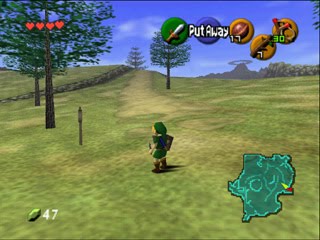
On Ocarina of Time, the day/night cycle gives the game realism. At day, Hyrule's market is lively, voices can be heard, there're fewer enemies on the field. When night comes, the castle gates get shut, castle candles get lit, field monsters change. NPCs do not have specific time-based schedules, though they do act differently depending on whether it's night or day (a fine example being the graveyard man).


On the other hand, Majora's Mask features different stuff. The game plays through three days, having the main character go back in time and repeating the cycle multiple times. Personally, this game was the first one which gave the "interactive village" feeling, having characters do different things at each moment of each day, being able to see them walking around, checking their mail, dancing, etc. The Bomber's Notebook, is a huge plus, as it enables the player to take note of where each character is at each moment, being able to track every one of them effectively. Not only the characters have different schedules throughout the three days, but music and dialogues also change. depending on the day The ability to slow down and speed up time was very useful, too. 


Radiata Stories
Yep, Radiata Stories does feature one of the most interesting approaches to scheduling characters' daily routines. Firstly, this game greatly improves on the "interactive village" concept given above, having one huge castle city and lots of small villages populated with exceptionally dynamic characters. Secondly, the game has a real lot of characters going around, most of which you can recruit to your party, which gives you a solid reason to look into each one's schedule and activities. Although every day is exactly the same, there's still more than enough variety, as the in-game world is huge.

Each area's day music is subtly different from their night music, having lighting change drastically upon time of day, creating an interesting, inmersive experience. Unfortunately, this game doesn't give you any in-game mechanism of tracking the characters down, so any perfectionist may have to seek help from GameFAQs in order to complete their friends list. Still, in terms of time-based villages and characters, this game rocked.

To resume today's endeavor, we talked about some interesting "interactive-world" games. Different approaches were taken for this: OoT divided night and day and had each character do different things accordingly. Majora's mask took three days, and scheduled time-based routines for each character. Finally, Radiata Stories, took a single day but programmed a dynamically big interactive world. The bomber's notebook from Majora's Mask was an excellent resource to keep track of each character, as one of the most entertaining things to do is observe the game world and discover what each character does. 

We end here. Next time, we'll take a step towards real-time interactive games, such as Farmville, Virtual Villagers and Animal Crossing.

miércoles, 3 de noviembre de 2010

Passage of time in games - Volume 1

Hi everyone. I've decided to start a series of articles on the passing of time in games (day/night cycles, day-of-week mechanics).

Watching how the sun rises and night turns to day on a game is always fun and pretty. It adds realism to the game, give the players the feeling that they're in an interactive world/town and add characterization to whichever place or characters are in the game. We will be talking about some of the games that use them, and how they use them, thinking of how well they implemented them or what they could have done to polish them better. The first game I could trace to implement a day/night cycle is Red Alert, an arcade game from 1981.


Ultima V
Ultima V. Though I haven't played the game, from reviews and player comments the cycle seems to go way too fast, not giving the player enough time to explore small places completely. Villagers do have different schedules depending on the time of day.


Harvest Moon Series
The harvest moon series have always contained some time-passing mechanism implemented, as the game generally has the player play through several years. In most games, each year is divided in four seasons, and each season in 30 days. Besides, each day may be sunny, cloudy, rainy or snowy, and there are special events on some dates (named festivals).

From the start, the villagers change their schedules depending on the time, though they don't walk from one place to another until later in the series. In latter games, each villager also has a different schedule for each day and weather, as villagers seldom go outside when it's raining and get more outgoing in summer. There are also birthdays on some days, and villagers changing their reactions according to day, weather, season, relationship with the villager, etc. There's enough degree of variation in these ones, even though the latest games seem to focus less on making each day seem different and more on formulaic gameplay and farming-mechanics.

Seiken Densetsu 3

 Ahh, Secret of Mana 2. The DNC was a nice addition to the game, also tackling the gameplay-changing-upon-time topic. Even though people didn't have strict schedules, shops changed their merchandise, NPC's changed their location and enemies were shuffled (some enemies even slept at night). Battle mechanics also changed, as one of the warriors (Kevin) could morph into a werewolf at night, thus increasing his attack power. Apart from time passing, this game also implemented a week-cycle of elements, giving more power to each day's element (Water, Fire, Wind, Earth, Leaf and Moon), adding one more day where all mana is balanced (and all inns are free, too!).
It was nice to see time passing when you took a ship or explored a dungeon, so I believe the DNC elements were enough. However, given that there was a whole day-of-week system, there was almost no impact in gameplay other than changing how elemental properties worked. Having some events working only on some days wouldn't have worked (as day-skipping is quite boring), but subtly changing dialogues or landscapes would have worked quite well on this one.


To sum up, we have seen games featuring simple day/night cycles, day-of-week cycles and games which implemented year-round mechanics. Most of them featured different schedules for each NPC, some of them changing upon weather, day of week and other variables. Nice touches include direct reference to a day's weather, changing gameplay according to moment of day and making fun the idea of the player discovering what each character does at different times, and when characters meet.

That's all for today, next time I'll be talking about Ocarina of Time, Majora's Mask and Radiata Stories.

sábado, 2 de octubre de 2010

Pathways

Pathways is a very interesting experimental game dealing with interactive storytelling. Reminiscent of choose-your-own-adventure books, this game always starts the same way and ends a different one, based on the path you took. 

Hello there, hun!
The game features 8 different paths and though the beginning is always the same (a woman in your room telling you that she worries when you're gone), it's very fun to find out the relationships between each character and just what your character is going to do.

In terms of graphics, they're kind of ugly, but then if you're looking at experimental games, they shouldn't be a concern. Gameplay is interesting, and a big-scale game with these same mechanics would be great. The only similar game I can think of is Steambot Chronicles (which I haven't played), but there are actual choices and dialogue branchs instead of the game's 'pathway decisions'.

Source 

miércoles, 1 de septiembre de 2010

Today I die

Today I die is a beautiful yet short experimental game. 

The game builds mainly on creative war logic, and is quite fun to play.  Graphics and sound were minimal, but the idea of the game was interesting enough to keep playing. Very intuitive, and a little bit sad in the end.


Source

domingo, 1 de agosto de 2010

Every Day the Same Dream

Surfing http://indiegames.com, I've stumbled upon the game Every Day the Same Dream.

It's quite an interesting game. Each complete playthrough lasts 20 minutes or less, and involves playing through a series of dreams - about a mundane life. What's quite appealing in this game is the sense of monotony it evokes and the minimal elements that break from it. Seemingly, you're a white-collar worker living a monotonous life, and can do little actions to change the fact - though the little actions the game does do change your perceptions.

It's nice to see how the game changes on each dream during a single playthrough. Graphics are minimalistically great, with city environments in shades of grey. The song played during gameplay is monotonous, 
but it effectively adds feeling to the game. And the ending is interesting, if open.

Most interesting, it was made in under 6 days. Do play the game.

Source
Games can change the world.